

Here at Turtle School, our main goal as a company is sea turtle conservation – we especially focus on Loggerhead Turtles.
Sea Turtles are keystone species, meaning that the role they play in an ecosystem is fundamental to the well being of the ecosystem itself and its inhabitants. In other words, removing a keystone species from an ecosystem would have catastrophic consequences for the trophic network.
In our database we already have more than 190 individual sea turtles identified from over 330 encounters across multiple locations, and we have evidence that some turtles have been living in our bay at Nguthungulli Julian Rocks for more than 20 years.
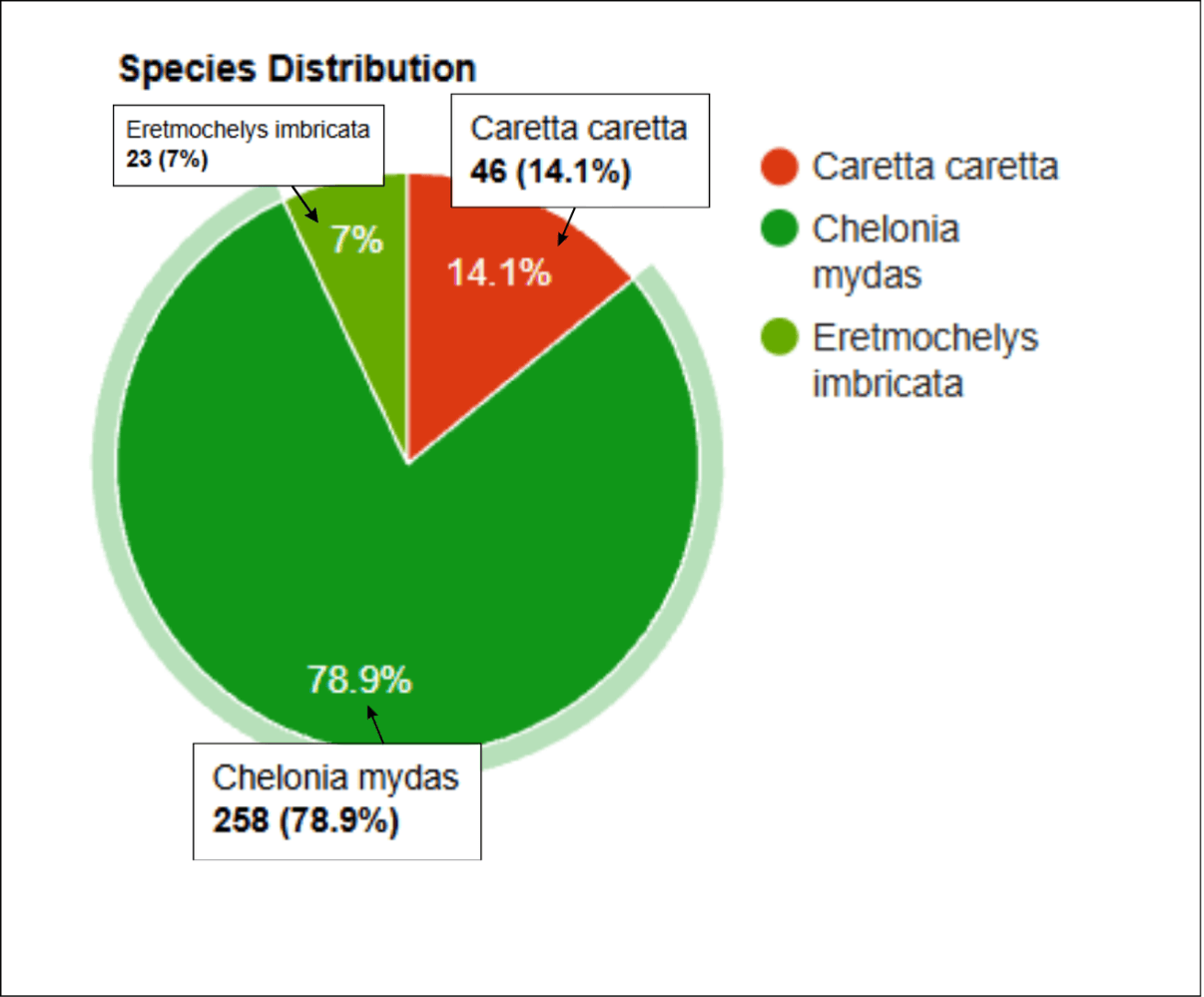
Common Species at Nguthungulli Julian Rocks
Loggerhead Turtle
Caretta carettaClassified as Critically Endangered in the Southern Pacific and Vulnerable globally, Nguthungulli Julian Rocks is one of the only places in the world where it is possible to meet these turtles close to shore and in shallow waters.
-
Loggerheads found within CBMP most likely originate from the south-west Pacific stock (LH-swPac), which is the only breeding stock for C. caretta in the South Pacific Ocean (Boyle et al., 2009., Wallace et al., 2010). LH-swPac are currently listed as Endangered in NSW, and Critically Endangered by the IUCN, with annual nesting abundance averaging between 101 and 1000 clutches per year, and the total individuals amounting to less than 1% of the global population (Limpus & Reimer, 1994, Limpus & Casale, 2015., SWOT, 2025). This is primarily due to anthropogenic impacts such as bycatch in fishing activities, injury, climate change and habitat loss (Limpus & Reimer, 1994., Limpus & Casale, 2015).
There has also been an increase of marine turtle nesting events in NSW over recent years. During the 2023-24 nesting season, NSW beaches reported 13 nests with 877 successful marine turtle hatchings, comprising 681 loggerheads and 196 greens and in 2024-25 that number increased to 18 nests, the highest number since reporting began in the early 1900’s (NSW Marine Estate, 2025).
The Cape Byron Marine Park (CBMP) provides an excellent opportunity to establish a marine turtle monitoring program due to its cultural and ecological importance. Such a program could support management actions through early threat detection, help evaluate recruitment trends within the park’s breeding and foraging zones, and could offer a metric for assessing the effectiveness of local conservation and management efforts.
Green Turtle
Chelonia mydasAfter years of collaborative work, the Green Turtle conservation status has been recently changed to Least Concern globally – a huge success for sea turtle conservation.
-
Green turtles were designated as a vulnerable species in New South Wales in 2000, as legislated by the Threatened Species Conservation Act 1995. The sGBR stock averages a nesting count of more than 10,000 clutches per year (SWOT, 2025) and the Queensland Government (2025) considers the sGBR stock to be recovering, showing a steady increase in average nesting abundance. The ongoing recovery of this subpopulation was made possible by effective management decisions and coordinated conservation efforts. Recently, the global green turtle conservation status was elevated from Vulnerable to Least Concern (Wallace & Broderick, 2025), highlighting the success achievable in marine conservation. In CBMP we can predominantly find juvenile and subadults, migrating from the southern Great Barrier Reef.
The Arakwal people of the Bundjalung nation hold a deep cultural connection with sea Country. One of the Arakwal messenger totems, Binguing (green turtle), is especially significant in Arakwal traditions and stories. “Turtle (Binguing) (Chelonia species) is an important messenger that provides knowledge of the sea Country.” (Arakwal, 2026).
Hawksbill Turtle
Eretmochelys imbricataClassified as Critically Endangered globally, the Hawksbill Turtle has the prettiest carapace in terms of colourings and patterns – it is one of the main reason it was hunted in the past. The carapce was used to make accessories and everyday life objects.
-
Hawksbills in NSW originate from the north Queensland stock (H-nQld), and these turtles nest primarily in northern Australia, with foraging grounds that extend to the GBR, Indonesia, Papua New Guinea, and the Solomon Islands (Fitzsimmons and Limpus 2014). The Queensland government (2020) estimated the number of nesting females to be around 4000. According to the Queensland Marine Turtle Conservation Strategy 2021-2031, the stock conditions of H-nQld are severely depleted, with a significant decline in trend.
Anecdotally, Hawksbills are the least abundant marine turtle species found within CBMP. In the Marine Park, we can predominantly find juveniles and subadults. The younger individuals are the smallest turtles we are able to encounter in this area, as the Hawksbill Turtles are the second smallest out of all the sea turtle species globally present. The juveniles reach this area during their migration after birth, and it is not a surprise that they are the least used to humans: smaller and younger individuals have been anecdotically known to flee if snorkellers or divers get close.
How to Get Involved
Every Turtle Has a Story
Turtle School transforms ocean lovers into citizen scientists. By photographing turtles and submitting your sightings, you help us identify individuals, monitor our poulation and better understand turtle behaviour and movements in Cape Byron Marine Park and beyond.
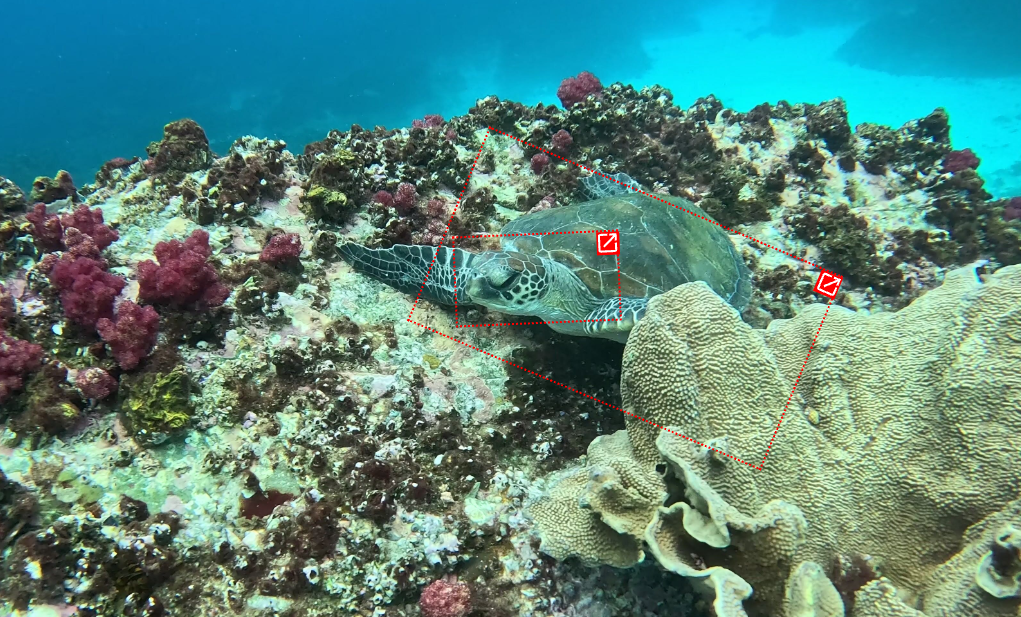
Join our Turtle School ecology workshop: learn more about sea turtles, their ecology, and how to identify the species we have in the area.
Jump on board for one of our in-water tours: explore Nguthungulli Julian Rocks with us, snorkelling or diving!
Grab your camera and be ready to get the perfect shot: capture the turtle’s face, carapce, and flippers for the perfect Photo-ID.
Upload your best shots to the Internet of Turtles: submit your sightings after the dive or snorkel, and let the algorithm work its magic.
Real conservation at work: the algorithm will match your turtle to the ones in the global database, helping us to track individuals and monitor our population!
Why your pictures matter
Individual identification
Every turtle has unique scales.The facial scales, the flippers, and the carapce of a turtle are unique for each individual and are an effective, simple, and non invasive way to identify each turtle.
The Internet Of Turtles website uses two algorithms (HotSpotter and MiewID) to match each upload to the turtles already present in its database.
Population Monitoring
Track movements in Byron Bay and other regions.Thanks to Photo-ID, we are able to monitor the fluctuation of our local population. If one of “our” turtles is sighted in a different area, the website will alert us and it can help us better understand the migratory movement of the poulation.
Conservation
Support long-term protection efforts.By participating in our tours and contributing to Turtle School research and citizen science project, you are directly partaking in long-term conservation of sea turtles. Every picture counts, every small step leads to a bigger one.
Citizen Science
Become part of the marine research community.By participating in our citizen science workshops and collaborating with Turtle School, you’ll learn useful skills you will be able to apply any time you are snorkelling or diving – anywhere in the world!
The Internet Of Turtles is a global database, with projects all over the world, so next time you are snorkelling or diving somewhere, grab your camera, snap away, and upload your turtles – we are sure there’s an organisation like us out there that will be super greatful for your contribution!
Our Nguthungulli Julian Rocks Superstars
Frank
Loggerhead TurtleAn older, adult male loggerhead, sighted multiple times in the span of more than 20 years.
-
Frank has been see exhibiting different uses of the sanctuary zone including foraging, resting, swimming and visits to the cleaning station. Frank is recognisable by two characteristics of the carapace: a large vertical crack, and a notch in the left side in correspondence of the rear flipper. The first anecdotal sightings date back to 2002, with photo documentation in 2012 and the most recent recorded encounter in 2026.
His presence in the area for over 20 years can help us identify Nguthungulli Julian Rocks as a stable foraging and aggrefation area for sea turtles, and in particular for adult loggerheads.
Cabezona
Loggerhead TurtleAn adult male loggerhead turtle, photographically documented multiple times since 2006, with first reported sighting dating 2002.
-
Cabezona’s first photographed encounter dates all the way back to 2006, while his first reported sighting dates 2002 – he was one of the loggerheads tagged during a study conducted in the bay (Speirs, 2002). He has been seen multiple times foraging, swimming, and resting. A large, central scar on his carapace and an amputated front left flipper are the main characteristics helpful to his identification, together with a series of notches on the edge of his carapace.
His presence, together with Frank’s, strengthens the understanding of the long term use of the area, with high site fidelity and long term residency.
Santiago
Green TurtleA young green turtle, identified for the first time in 2023, and sighted 12 times so far (July 2026).
-
The brownish colouration of the carapace suggests this young turtle has been living in this area for quite some time already. New turtles coming directly from the Great Barrier Reef tend to have a more orange colour, due to the difference in food sources.
Dj 3 Tags
Hawksbill TurtleA subadult we have spotted only twice, but a few years apart (2019 and 2025).
-
This turtle was given this name due to the numerous tags it has on its flippers. Both its front flippers and its right back flipper have been pierced with metal and plastic identification tags.
These tags are used to identify the turtles, but the tagging practice is becoming less and less used due to its ethical and animal welfare implciations. Also, with the technology we have nowadays, Photo-ID can be even better – it has multilpe advantages in various fields, from animal stress to tag loss.